What is Post-Impressionism?
Reading time: 2 mins

Impressionism vs. Post-Impressionism
Post-Impressionism emerged circa 1886, in the same year as the last Impressionist group show in Paris. Whilst Impressionism was concerned with true representations of form, light, and colour, a young group of painters sought to break free from this naturalistic approach.
Lasting until 1905, the name Post-Impressionism was given to the movement retrospectively in 1906, by Bloomsbury group artist and art critic Roger Fry. As this was a movement of experimentation, no singular stylistic sensibility can be used to define it. Instead, a collection of styles emerged within the movement.
Styles within Post-Impressionism
Divisionism
Founded in 1884 by Georges Seurat, Divisionism (sometimes referred to as chromoluminarism) is defined by the separation of colours into individual dabs onto the canvas that interact optically to create an image, as can be seen in Sunday Afternoon on the Island of Grand Jatte, which Seurat painted between 1884-1886. Divisionism developed alongside Pointillism, which instead sees the separated colours applied in perfectly circular dots, creating a similar yet unique optical illusion to occur on the canvas. Many of Seurat’s paintings use this technique, including The Lighthouse at Honfleur, 1886.

Cloisonnism
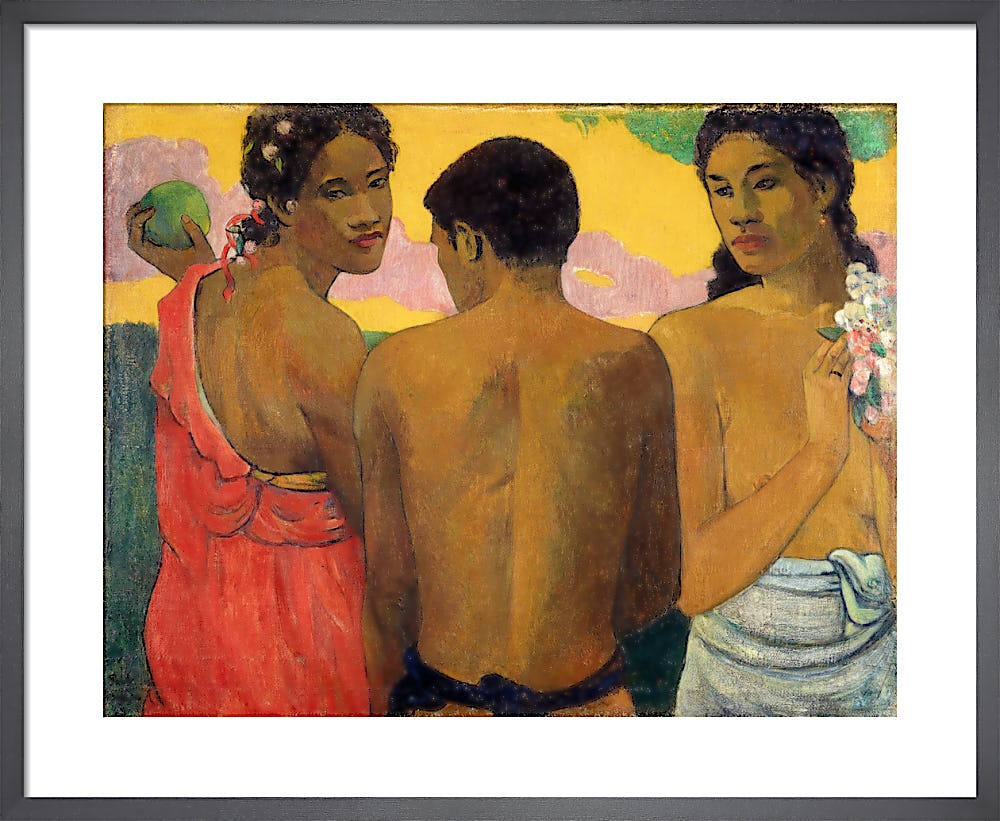
Founded by Émile Bernard and Louis Anquetin, who were soon joined by Paul Gauguin, Cloisonnism is characterised by bold and flat forms separated by dark contours. A purely aesthetic pursuit, the style was inspired by both stained glass (from which Edouard Dujardin coined the name in 1888) and from Japanese Ukiyo-e woodcut prints, which were extremely popular among French artists of the time.
Synthetism
Synthetism was a term used by Paul Gauguin, Émile Bernard and Louis Anquetin that utilised the same application as Cloisonnism, though it formed a broader artistic movement. Further to considerations of line, colour, and form, artists of the movement were concerned with portraying emotion through naturalistic imagery, which often incorporated an undercurrent of symbolism and spiritualism.

Further notable Post-Impressionist artists
Paul Cézanne (1839-1906) - Cézanne was the pre-eminent figure of Post-Impressionism, influencing the most significant artists of the movement, including Gauguin and Van Gogh. He reduced every object in nature to one of three shapes; the cone, the cylinder, and the cube. He then achieved a three-dimensional architectural effect by deliberately alternating warm and cool tones and by using a dark outline around objects.
Henri Rousseau (1844-1910) - A self-taught artist, Rousseau’s paintings fall under the category of Naive Art, which is a term attributed to outsider, folk, and non-Western art. Rousseau was influenced by other forms of Naive art while creating his Post-Impressionist works. Utilising symbolism, he was greatly inspired by nature. His most famous work, Surprised! (Tiger in a Tropical Storm), painted in 1891, is the first of 20 jungle themed paintings, which were painted entirely from his imagination.
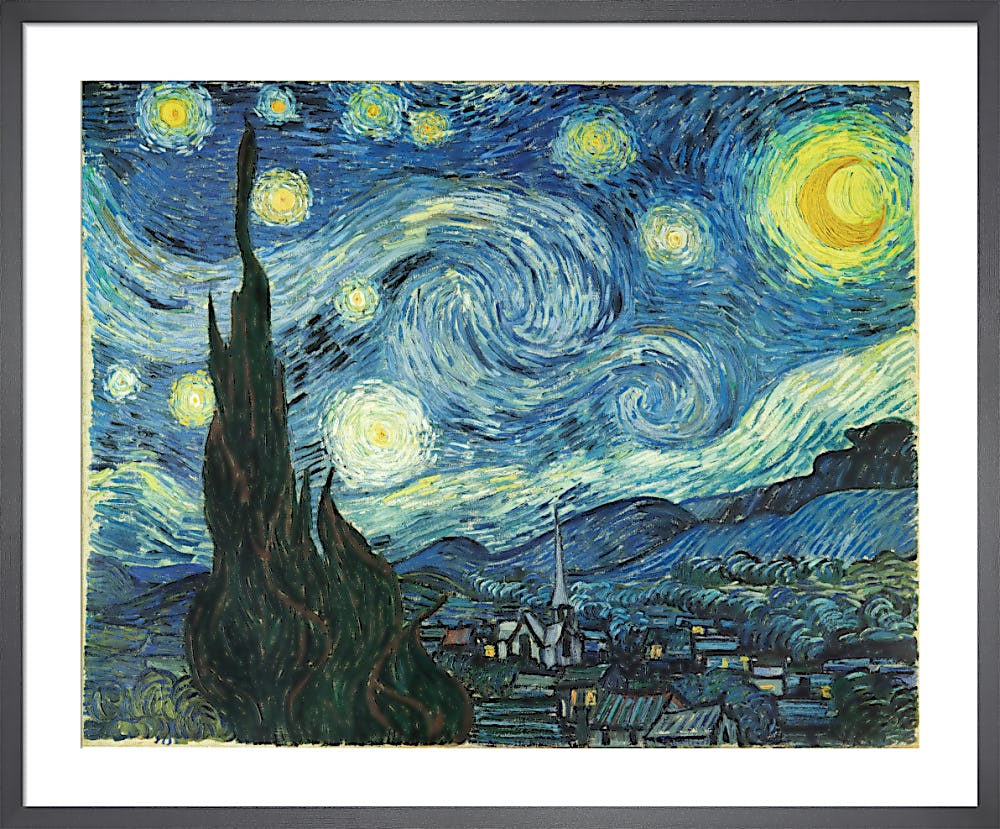
Vincent van Gogh (1853-1890) - Gaining praise posthumously, today, Van Gogh is one of the most celebrated Post-Impressionists. A tortured and impulsive artist, he created many iconic paintings, including The Starry Night, 1889. His divisionist style used short unblended brushstrokes of colour, conveying emotion and expressive energy through his work.
Henri de Toulouse Lautrec (1864-1901) - The accomplished draughtsman, printmaker, illustrator, and painter is known for depicting provocative and theatrical Parisian scenes, capturing luminous colour and movement. Toulouse-Lautrec used a lively application of paint to capture the movement of his subjects, including The Clown Cha U Kao, which he painted in 1895.



Subscribe to our newsletter
Be the first to hear about our new collections, limited edition launches, and enjoy artist interviews.
By subscribing you agree to our privacy policy.
Contact us
01273 511 942
Mon-Fri, 9 am - 5 pm
All art prints and images on this website are copyright protected and belong to their respective owners. All rights reserved.