A Surrealist state of mind: 100 years of Surrealism
Reading time: 2 mins
2024 marked the centenary of André Breton’s Surrealist Manifesto. In the last few years we have seen a resurgence of the movement, both in the art market and when influencing new creativity. Though, did Surrealism ever leave artistic expression? Here we look at how Surrealism has inspired literature, film and art since its inception.

From Dada, Surrealism is born
Before Surrealism came Dada. An anti-establishment art movement that emerged in 1915 within the context of the Great War and Marxist Theory, its members (which included Marcel Duchamp, Man Ray, Sophie Taeuber-Arp, Jean Arp and Max Ernst) created protest art that included nonsensical performance pieces, collage and Duchamp’s ‘readymades’ such as Fountain (1917).
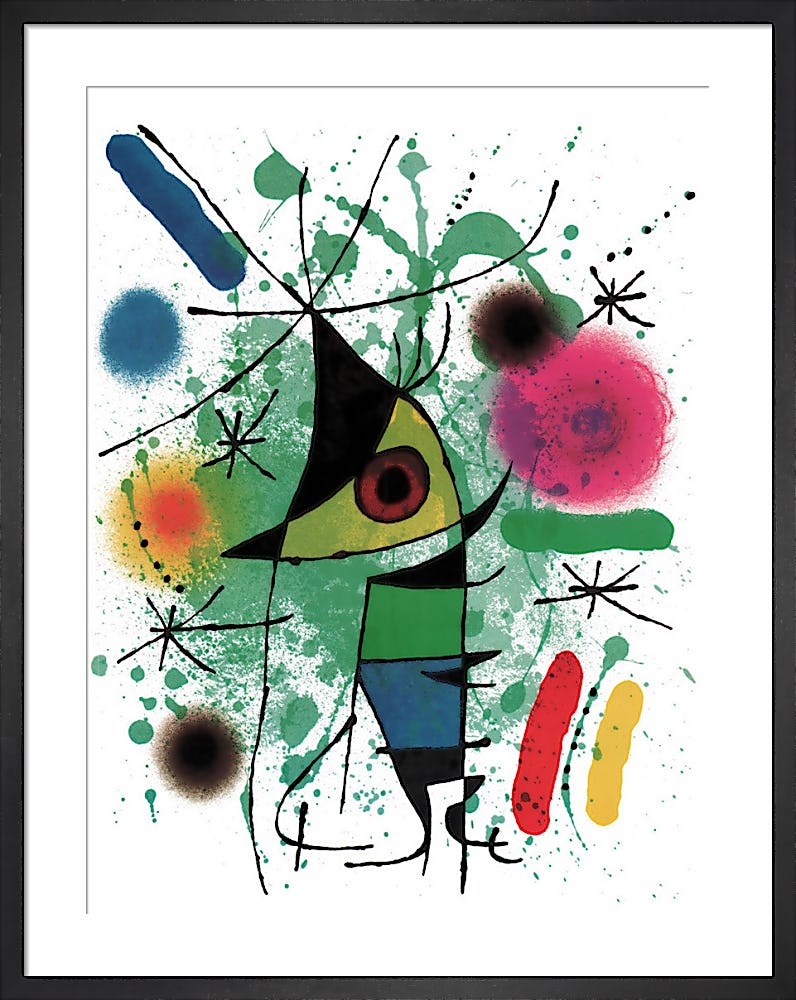
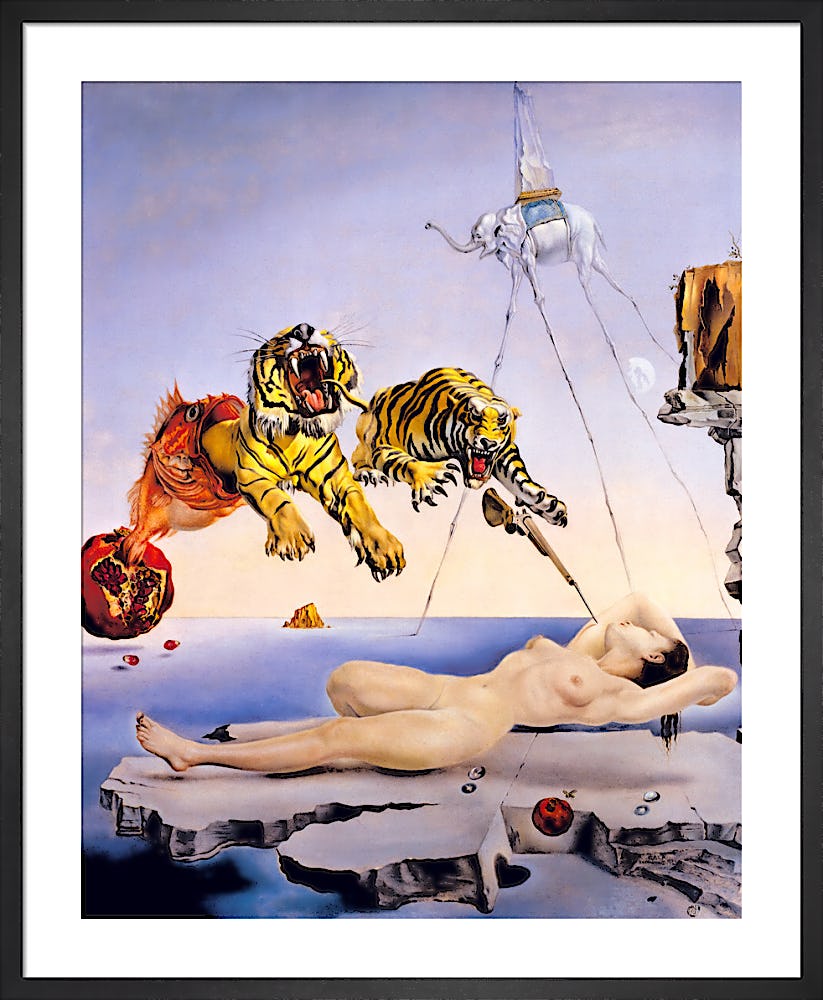
By 1921, some members began to feel what they perceived as negative limitations of the movement, and, with André Breton leading the way into a new school of thought, Surrealism was born. Expanding upon nonsensical ideas, artists and writers explored the possibilities of trance and dream-like states of mind. Automatism, a type of automatic writing and drawing was used by such artists as Jean Arp, Joan Miró and Salvador Dalí to produce imagery directly from their unconscious.
Literature and Film
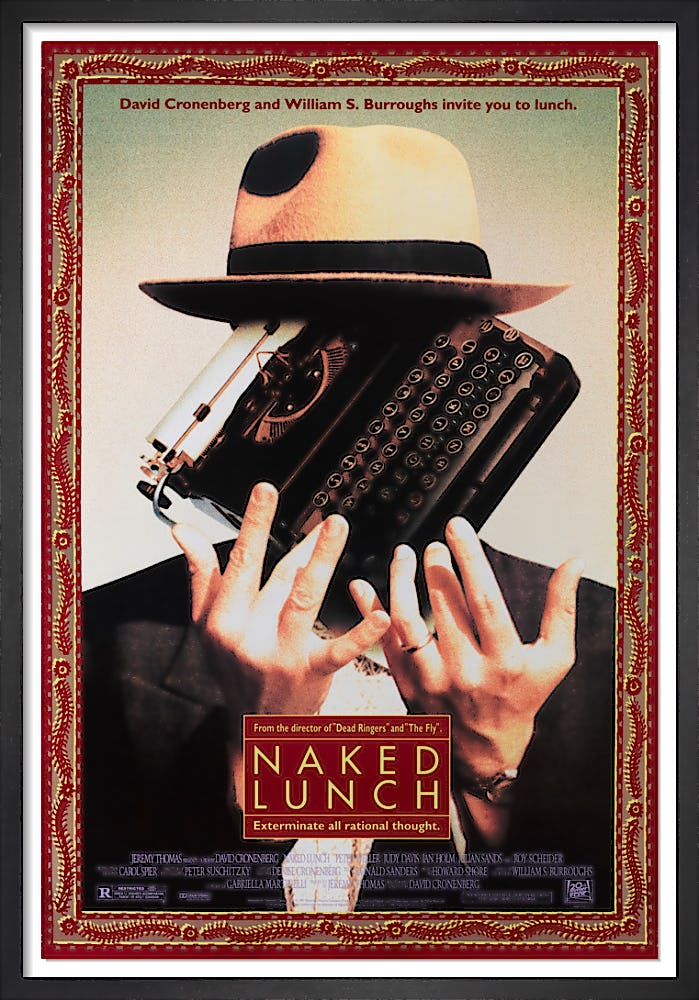
Books such as Franz Kafka’s ‘Metamorphosis' (1915) and Willian S. Burroughs ‘Naked Lunch’ (1959) offer examples of Surrealist literature. Described by Penguin Books as ‘Nightmarish and fiercely funny, a taboo-breaking masterpiece that follows the character of Bill Lee through Interzone: a surreal, orgiastic wasteland of drugs, depravity, political plots, paranoia, sadistic medical experiments and endless, gnawing addiction’, Burroughs’ novel shocked and appalled audiences of the day.
In 1991, the film adaptation written and directed by David Cronenberg was released. A surrealist science fiction drama, it became a cult classic acclaimed for its surrealist visual and thematic elements. It’s also interesting to observe how the artwork for this now collectible film poster (below) resembles the paintings of the artist, René Magritte.
This year saw the release of Kate Winslet’s cinematic production Lee, a biopic about the high fashion model turned photographer Lee Miller. After a very successful if not short lived modelling career in New York, Miller moved to Paris in 1929 to work with the artist and photographer, Man Ray. It wasn’t long before she opened her own studio as a commercial portrait and fashion photographer, going on to obtain a freelance position for Vogue. She’s known for her Surrealist images created at this time, using the technique known as Solarisation.
Set in 1944, the film focuses on Miller’s time working as a correspondent accredited to the US Army, where she was one of only a few female photojournalists to cover the front-line war in Europe. With Winslet starring in the title role, the film brings much needed recognition to one of the many female artists of the movement, whom history has either forgotten or decided were merely muses of their male counterparts.


Surrealism in fashion
Around the same time as Lee was set, the influence of Surrealism in fashion illustration is easy to see in this dream-like and highly detailed illustration (below), created for Vogue’s August 1937 cover by Miguel Covarrubias.

Digital developments in automatism and surrealist imagery
In the 1960s, the late artist Roman Verostko (Sept 1929–Jun 2024) pioneered code-generated imagery, known as Algorithmic Art. Verostko developed his own software to control a pen plotter, which is a mechanical device that holds a pen or brush that is linked to a computer that controls its movement. Viewed by the artist as computer automatism, the process mimics that of the Surrealists’ automated drawing technique. (You can view one of Verostko’s drawings in The V&A’s collection here)
Fast forward to today and there is an emerging number of painters who are creating complex coding for AI software to produce specific reference photos filled with their chosen inspiration and meaning – the outcome only can be described as surreal, experimental and forward thinking.


Sources and further reading
- Why Surrealism Matters, Mark Polizotti, 2024, https://yalebooks.yale.edu/book/9780300257090/why-surrealism-matters/
- https://www.leemiller.co.uk/
- Movements in Modern Art: Surrealism, Fiona Bradley, 1997
Related stories
 spotlight
The visual genius of Tim Burton’s gothic aesthetic
spotlight
The visual genius of Tim Burton’s gothic aesthetic
Reading time: 3 mins
We venture into the weird and wonderful world of animator and director Tim Burton to uncover the inspiration, stylings and tales behind some of his most iconic films.
 spotlight
Exhibitions to see this autumn
spotlight
Exhibitions to see this autumn
Reading time: 3 mins
Discover our top picks, brought to you by many of our long-standing museum and art gallery partners including The Royal Academy, Tate and National Portrait Gallery.
 spotlight
Robert Indiana – a self-proclaimed ‘American painter of signs’ and leading figure of Pop art
spotlight
Robert Indiana – a self-proclaimed ‘American painter of signs’ and leading figure of Pop art
Reading time: 3 mins
From his formative years moving around the state of Indiana, to his groundbreaking work produced during his time living and working at Coenties Slip, discover the fascinating life and art of one of America’s most exciting artists.
 spotlight
Projekt 26: Harriet and Sylwia’s recent visit to Warsaw
spotlight
Projekt 26: Harriet and Sylwia’s recent visit to Warsaw
Reading time: 2 mins
Earlier this year, the passionate duo behind Projekt 26 visited the family of Waldemar Swierzy at their home in Warsaw, where they viewed his extensive archive of work, including posters, paintings and magazine covers.
 spotlight
Diverse and endearing lithographs printed at Imprimerie Arnéra
spotlight
Diverse and endearing lithographs printed at Imprimerie Arnéra
Reading time: 2 mins
As we release a new selection or rare lithographs from the historic Imprimerie Arnéra Archive, we take a closer look at some of the artists who worked with Arnéra to produce these now collectible artworks, including Pablo Picasso and Jean Marais.
 spotlight
Our team’s favourite artworks
spotlight
Our team’s favourite artworks
Reading time: 1 min
Each month we’re asking a team member to select their favourite artwork and tell us why they love it so much. Here’s a roundup of our first 6 staff picks.
 spotlight
The history of the Olympic Poster
spotlight
The history of the Olympic Poster
Reading time: 3 mins
Newly released from our historic archive, we take a look at some of the collectible posters from past Olympic Games, including works by Josef Albers, David Hockney and Bridget Riley.
 spotlight
The history of Fiorucci: A masterclass in playful, head turning poster design
spotlight
The history of Fiorucci: A masterclass in playful, head turning poster design
Reading time: 2 mins
To mark the launch of our rare Fiorucci poster collection, we explore the history of the iconic label, as well as the poster campaigns that propelled Fiorucci to the worldwide market.
 spotlight
Highlights from our Team GB poster launch party, held at The Hoxton
spotlight
Highlights from our Team GB poster launch party, held at The Hoxton
Reading time: 1 min
See highlights from the Team GB poster collection launch night, where friends, colleagues and our Collector’s Club members gathered to celebrate.
 spotlight
We catch up with Hastings-based abstract landscape painter, Louise Body
spotlight
We catch up with Hastings-based abstract landscape painter, Louise Body
Reading time: 4 mins
Join us as we catch up with Louise Body to discuss her upcoming limited editions with K&M, lunchtime sea swims and her career highlights to date.
 spotlight
Meet Martin Barnes, Senior Curator of Photography at the V&A
spotlight
Meet Martin Barnes, Senior Curator of Photography at the V&A
Reading time: 5 mins
Having worked for the V&A since 1995, Martin Barnes tells us about his career highlights, the new V&A Photography Centre, and how the Curtis Moffat collection came to be part of the museum’s archives.
 spotlight
Exhibitions to see this summer with a National Art Pass
spotlight
Exhibitions to see this summer with a National Art Pass
Reading time: 2 mins
Discover the top exhibitions of the summer, brought to you by our friends at Art Fund
 spotlight
40 years of DACS: We talk to Amberley Jamieson to learn more about DACS’ mission to protect and champion artists
spotlight
40 years of DACS: We talk to Amberley Jamieson to learn more about DACS’ mission to protect and champion artists
Reading time: 3 mins
In celebration of their 40th anniversary, we talk to Amberley Jamieson of DACS’ licensing team to unearth the not-for-profits’ beginnings, the impressive work they have done so far in protecting artist’s rights, and their continued mission as they look forward to the next 40 years.
 spotlight
Our Team GB limited edition launch party, held at Cristea Roberts Gallery
spotlight
Our Team GB limited edition launch party, held at Cristea Roberts Gallery
Reading time: 1 min
See highlights from the Team GB limited edition collection launch night, where friends, family, colleagues and artists gathered to celebrate.
 spotlight
We talk to Tamie Cornwall-Jones about the rich history of Petersburg Press
spotlight
We talk to Tamie Cornwall-Jones about the rich history of Petersburg Press
Reading time: 8 mins
Petersburg Press were exemplary in their approach to collaborating with artists. David Hockney, Sir Howard Hodgkin and Jim Dine are just a few of the many emerging artists to work with them. Playing a vital role in the company since she joined in 1969, Tamie tells us about the history of the Press and the treasures she still uncovers in the archive today.
Subscribe to our newsletter
Be the first to hear about our new collections, limited edition launches, and enjoy artist interviews.
By subscribing you agree to our privacy policy.
Contact us
01273 511 942
Mon-Thurs, 9 am - 5 pm
Fri, 9 am - 2 pm
All art prints and images on this website are copyright protected and belong to their respective owners. All rights reserved.