We catch up with Yoni Alter
Reading time: 3 mins
London-based artist Yoni Alter works across print, painting, sculpture and public installations. One theme that ties them together above all else is the aim to bring a sense of playfulness and fun to the viewer. Join us as we discuss Yoni’s Pop Art inspired CMY paintings, his ‘Love Continuum’ public sculpture, and his ‘Shapes of Cities’ print collection.

Q: Can you tell us about your skyline collection?
A: I come from a graphic design background, and I’ve always been drawn to simple, iconic forms. One day, while walking through Hyde Park, I noticed something from a particular spot: the Shard and the London Eye seemed to intersect. Just two basic geometric shapes — a triangle and a circle — aligning in the skyline.
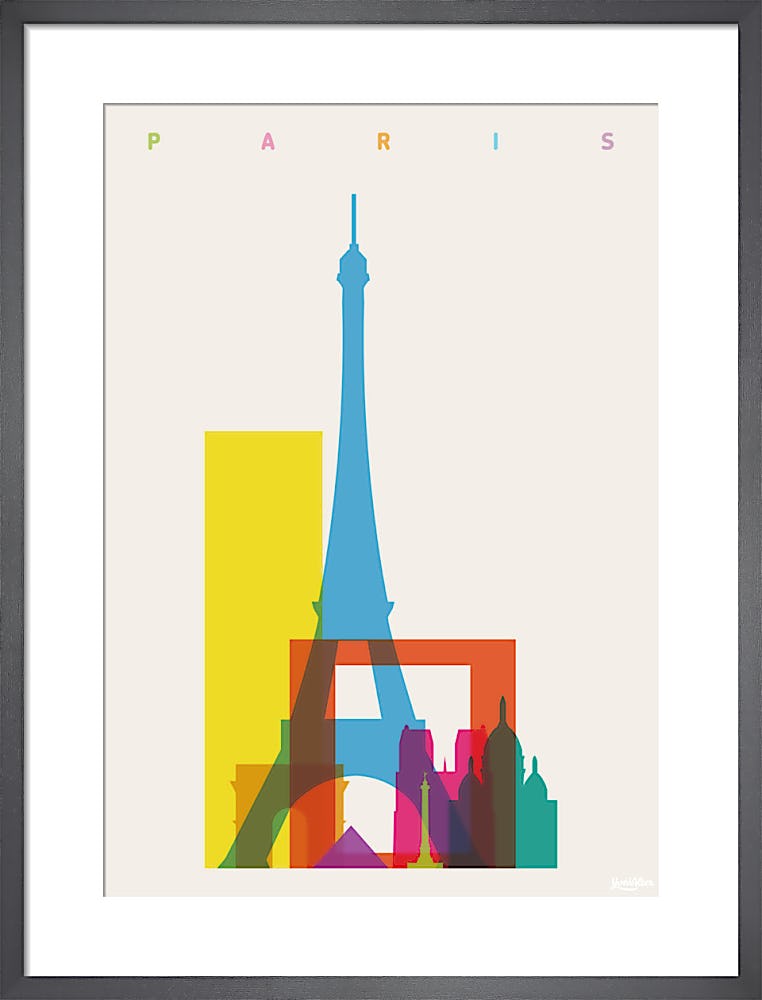
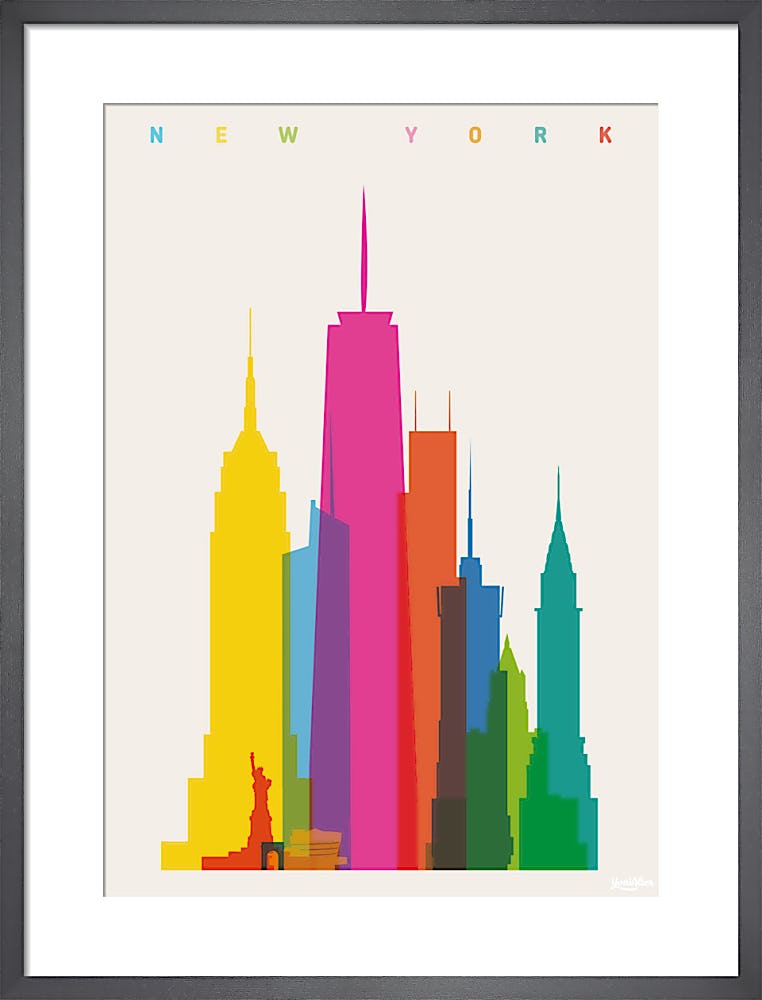
That moment made me wonder: what other iconic buildings in London are made up of simple shapes? I started collecting silhouettes of London landmarks and overlaying them in solid colours. I kept them drawn to scale, so the composition feels more like a diagram than a collage. That became the first print in what I later titled ‘Shapes of Cities’.
When friends saw the London print, they asked if I could make versions for other cities — and that’s how the series began to grow. It’s been a really enjoyable process. I get to dive into the architecture of different places, learn about their iconic buildings, and discover unexpected shapes that haven’t appeared in the series before. I also like including public sculptures and monumental structures when they feel right.
By the way, that spot in Hyde Park where I saw the Shard and the Eye line up — if you enter from Exhibition Road and walk straight in, it’s just off to the right, around the tennis courts.

‘I love experimenting with techniques and production methods — especially finding new ways to approach how something is made.’
Yoni Alter
Q: You often depict Pop cultural references such as Mickey Mouse in your paintings that utilise a limited CMY palette. What are your main drives in producing this work?
A: I’m interested in the power of simplicity — in how far iconography can go. Mickey Mouse is a perfect example. When I was a kid, like most kids at the time, I loved Mickey Mouse. It’s such a globally recognised icon, which makes it especially fun and interesting for me to work with.
I like exploring how to depict it using minimal means — to test the boundaries between what’s still recognisable and what’s already abstract. I’m curious how far I can reduce it, and how minimal I can go, while still keeping that spark of recognition.
I love experimenting with techniques and production methods — especially finding new ways to approach how something is made. In my CMY spray paintings, I discovered that by using translucent paints and a halftone technique, I could create a surprising range of colours. The overlapping layers of cyan, magenta, and yellow interact in a way that feels both systematic and expressive.

Q: Is there a universal theme that runs throughout your oeuvre, or do different mediums offer opportunity to explore in different ways?
A: That’s an interesting question. When I look back at the things I’ve made, a few common threads come to mind. One is that the viewer always plays a role in the work — whether it’s by noticing something that wasn’t obvious at first, or by physically interacting with it. Another is simplicity — in form, in composition, or in how the idea is communicated.
But if I had to name the most consistent element, it would probably be fun. Whether it’s a sculpture, a print, a painting, or an object, I think they all aim to bring a sense of playfulness and enjoyment.
I work across many mediums because of curiosity — I’m always discovering something new and wanting to try it out. For example, after making the Shapes of Cities prints, I became interested in achieving the same effect of overlapping translucent colours, but in three dimensions. I started experimenting with translucent acrylic, creating sculptures and objects that felt like a physical interpretation of the prints.
Once I began working with materials — thinking about space, scale, and how things behave in the real world — that opened up even more ideas. I found myself exploring new techniques and materials, and that exploration continues to drive my practice.

Q: Can you tell us about your Love Continuum sculpture?
A: When I create, I start with play.
Play and experimentation are how magic happens.
That was true for Love Continuum too.
I had been squeezing paint straight from the tube onto canvases — I loved those thick, juicy, tube-shaped lines.
That playful experiment led me into 3D cursive sculptures — physical lines you could actually hold.
And once I held one, I thought:
Why stop at two dimensions? Let’s go into three! Let’s bring the whole line to life!
I always strive for minimalism.
Simplicity has power.
And here, tucked inside a few simple loops, is Love waiting to be discovered.
From the first moment I imagined this shape, I knew it needed to be huge.
Something you could walk through, sit on, touch.

Q: Are there any insights into the making process of your sculpture and installation work that you could share with us?
A: Large outdoor sculptures and installations are obviously challenging to produce. There are so many factors and limitations to consider — from logistics and durability to safety and permissions. But despite all that, it’s incredibly rewarding to visit the site after the installation and watch how people interact with the work. Seeing them discover it, engage with it, and experience a moment of joy — that makes it all worth it.
‘A big part of what drives me is the joy people feel when they encounter the work — so the more people it can reach, the more joy I can share.’
Yoni Alter
Q: What are your future aspirations for your work?
A: Scale is really important to me. One of my aspirations is to create artworks that are as large as anyone can imagine. For example, I’d love to see my Love Continuum sculpture installed outdoors at a scale where not just children, but adults could sit on it, walk through it, and fully experience it physically.
I also hope my work reaches as many people as possible. A big part of what drives me is the joy people feel when they encounter the work — so the more people it can reach, the more joy I can share.


Related stories
 spotlight
We catch up with Yoni Alter
spotlight
We catch up with Yoni Alter
Reading time: 3 mins
We catch up with Yoni to to discuss his broad, experimental, playful oeuvre that ranges from spray paint and printmaking to small scale sculpture and large scale public art.
 spotlight
Fender’s electrifying ‘You won’t part with yours either’ campaign
spotlight
Fender’s electrifying ‘You won’t part with yours either’ campaign
Reading time: 2 mins
Discover the history behind Fender’s early beginnings, from the revolutionary amps and guitars invented by Leo Fender, and Robert Perine’s compelling campaign that helped Fender grow from a small town company to a music industry leader.
 spotlight
Projekt 26: Sylwia shares what she loves most about our latest release of Polish posters
spotlight
Projekt 26: Sylwia shares what she loves most about our latest release of Polish posters
Reading time: 1 min
Proud custodian of Polish design heritage, Sylwia of Projekt 26 shares what she loves about the latest designs to join our limited edition collection and the artist’s behind them.
 spotlight
Meet contemporary painter, Marta Chojnacka
spotlight
Meet contemporary painter, Marta Chojnacka
Reading time: 3 mins
We talk to Marta about her artwork’s inescapable optimism, her vibrant palette inspired by the flora and sunlight of Barcelona, and daily creativity.
 spotlight
Highlights from Affordable Art Fair, Hampstead
spotlight
Highlights from Affordable Art Fair, Hampstead
Reading time: 1 min
A photographic roundup of our weekend exhibiting at Affordable Art Fair Hampstead, featuring the limited and original artworks on our stand, as well as views from around the fair.
 spotlight
Meet Meg Gage Williams, founder of The Archives Design Group & Stick No Bills
spotlight
Meet Meg Gage Williams, founder of The Archives Design Group & Stick No Bills
Reading time: 6 mins
Learn how Stick No Bills grew into a company with flagship galleries around the world and the artists behind the BOAC advertisement posters that we are thrilled to present as fine art prints.
 spotlight
Ukiyo-e: Hokusai, Hiroshige and Kawase’s idyllic Japanese landscapes
spotlight
Ukiyo-e: Hokusai, Hiroshige and Kawase’s idyllic Japanese landscapes
Reading time: 2 mins
An ancient technique dating back to 7th century Buddhist monks, Ukiyo-e woodblock printing became a popular medium in Japan’s Edo period that all levels of society could afford. Discover the lives and art of three master Ukiyo-e artists whose works are still revered today.
 spotlight
We catch up with Faye Bridgwater
spotlight
We catch up with Faye Bridgwater
Reading time: 6 mins
We sit down with K&M contemporary artist Faye Bridgwater to learn more about her involvement in Saatchi Gallery’s exhibition ‘Flowers – Fauna in Contemporary Art & Culture’, judging at the Guildford House Open Call and once again displaying her joyful paintings in this years’ Artists Open Houses in Brighton.
 spotlight
Affordable Art Fair Hampstead, 2025
spotlight
Affordable Art Fair Hampstead, 2025
Reading time: 3 mins
We are excited to announce that we will be exhibiting at the Affordable Art Fair, Hampstead this May. We will be showcasing limited editions and original artworks by 15 of our contemporary artists including Nigel Hall RA, Liz West and Marc Quinn.
 spotlight
Angus Hyland in conversation with our Founder, Gyr King
spotlight
Angus Hyland in conversation with our Founder, Gyr King
Reading time: 11 mins
To mark the release of Angus’ limited edition prints, our founder visited the graphic designer, author and creative director at Pentagram’s London office.
 spotlight
Meet Abstract painter Susan McDonald
spotlight
Meet Abstract painter Susan McDonald
Reading time: 2 mins
Join us as we talk to Susan about her artistic practice and her new collection of fine art prints, available exclusively with K&M.
 spotlight
Meet painter and wildlife conservationist, Sophie Green
spotlight
Meet painter and wildlife conservationist, Sophie Green
Reading time: 4 mins
Join us as Sophie shares details of her upcoming exhibition, encountering the animals she paints in their natural habitats, and her conservation work, including being an ambassador for the Jane Goodall Institute UK.
 spotlight
Meet digital artist, Christine Wilkinson
spotlight
Meet digital artist, Christine Wilkinson
Reading time: 3 mins
Christine’s passion for digital manipulation began at art college in the 1970s, where she queued to use the school’s first photocopier, proceeding to photocopy soup cans in a Warholesque manner. We visited Christine to learn more about her intuitive process and her endless inspirations, including colour and artists, in this joy-filled interview.
 spotlight
Barbara Hepworth: Master of Modern Sculpture
spotlight
Barbara Hepworth: Master of Modern Sculpture
Reading time: 2 mins
Learn more about the master of sculpture’s extraordinary life and work, including her works on paper that we’re proud to publish in partnership with The Hepworth Wakefield, in the second of our masters series spotlights.
 spotlight
What is a screen print? We talk to screen printing duo, Shoji Silkscreen
spotlight
What is a screen print? We talk to screen printing duo, Shoji Silkscreen
Reading time: 5 mins
Alex and Joe are passionate about screen printing, from ancient processes to creating innovative modern techniques. Join us as we chat to them in their new studio at our Newhaven workshop.
Subscribe to our newsletter
Be the first to hear about our new collections, limited edition launches, and enjoy artist interviews.
By subscribing you agree to our privacy policy.
Contact us
01273 511 942
Mon-Fri, 9 am - 5 pm
All art prints and images on this website are copyright protected and belong to their respective owners. All rights reserved.